20.4.06
 Theo 234
SCRIPTURE, TRADITION,
MAGISTERIUM (3 units)
John Yocum, DPhil
W 2:00-4:40 pm
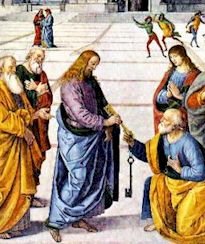
Fundamental theology endeavors to study the foundational reality of Christianity and theology, which is the revelation of God in Jesus Christ. This revelation seeks a response of faith from the human addressee. (This is the subject matter of Theo 205).
This present course, also included in fundamental theology, deals with the transmission of revelation through the ages, that is, Sacred Scripture and Sacred Tradition, as well as its authoritative proposition and interpretation through the Church’s magisterium. Hence, the three constitutive parts of this course will be concerned with giving a theological description and dogmatic explanation of, respectively, Scripture, Tradition and Magisterium.

 Theo 236 / MTP 01
INTRODUCING THE THEOLOGIES
OF MIGRATION (3 units)
Dr. Emmanuel de Guzman, PhD
Th 2:00 – 4:40 pm
The course focuses on methodological approaches in doing a theology of migration. It begins with anthropological-sociological perspectives to understanding the migrants’ experiences, and then deals with samples of attempts at doing systematic theologies form the migrants’ contexts. Students will participate in the construction of theologies for and with the migrants.
 Theo 237A
GOD/TRINITY (3 units)
Dr. Joaquin Yap, DPhil
T
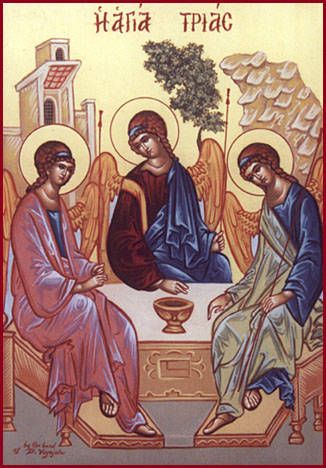
This doctrinal-pastoral course on the living God of Christian faith seeks to understand, interiorize, and proclaim the Trinitarian mystery as the central vivifying truth which responds to the deepest questions of the human heart. After a brief consideration of the present-day context of unbelief, the course gives a systematic exposition of the doctrine of the Trinity by means of Scripture and Tradition. The concluding lectures underline the pastoral dimensions of this doctrine which is meant to be the "deepest source, closest inspiration and the brightest illumination of the meaning of life that we can imagine" (Leonardo Boff).
Maximum number of credit students: 20
 Theo 237B
GOD/TRINITY (3 units)
Fernando Guillen, SchP
WThF 8:00-8:50 am
The Mystery of God: An Inquiry on Holy Trinity. The capital aspect of the Christian creed, which summarizes and enlightens the whole faith is the mystery of the Most Holy Trinity. Indeed, we discover there the everlasting source of the design of salvation, the deep meaning of the Incarnation of the Word, and the final horizon of the History of Mankind. Our course intends to explain the Trinitarian problem in Asian context today, to analyze the biblical and historical data about the Holy Trinity with clarity and precision, and to summarize briefly the meaning of the Catholic teaching on the Holy Trinity.
Bibliography: Holy Bible. Neuner, J. - Dupuis, J. The Christian Faith. Bangalore: Theological Publications in India, 2001. Forte, B. The Trinity as History. New York: Alba House, 1989. Lonergan, B. The Way to Nicaea: The Dialectic Development of Trinitarian Theology. Still River, Mass.: St. Bede's Publication, 1982. O'Collins, G. The Tripersonal God: Understanding and Interpreting the Trinity. New York: Paulist Press, 1999. Rahner, K. The Trinity. London: Burns & Oates, 1970.
 Theo 239A
CREATION, SIN, ESCHATOLOGY (3 units)
Jose Mario Francisco, SJ
TTh 10:35-11:50 am


 Theo 244 / Theo 334
 LUKE-ACTS MARIOLOGY: A SYSTEMATIC
Th 9:00-11:45 am
- Mary in the Lucan texts centering on the “Magnificat” and in the Acts of the Apostles
- Mary in the context of Gnostic, Dualistic Philosophies and Historical Sexism
- Mary in the historical development of “divine femininity” and Christian devotion
- Mary - have Christians misunderstood her? Why is Mary divisive?
- Mary – ethnic devotions and religious practices in various countries – Mother? “Goddess”?
- Mary – in the light of the above studies, who is Mary for you?
All graduate and postgraduate students may apply for credit in scripture, theology and spirituality. The course is also open to anyone who wants to be more discerning about Mary “place” in Christianity.
 Theo 270(A)

 Theo 248 / Theo 345 / MTP 14
THEOLOGY OF MINISTRY (3 units)
Jeffrey Chang, SJ
W 2:00–4:40pm
The Church, blessed by the Spirit with a diversity of charisms, formally recognizes certain services as ministries. Lay and ordained ministries share together in the Church’s ministry which continues Christ’s ministry in the world.
This systematic theology course will survey scriptural foundations, historical developments and theological principles, as well as accompanying pastoral implications, for ministries in the Church today. Some relevant contemporary issues include: empowering laity; lay ministries; collaboration in ministry; women in ministry; priesthood; diaconal ministry; religious life and ministry; ministerial practices and ethics. Ordained ministry will be examined in the more comprehensive context of Church ministries.
Regular readings and active participation in classroom discussions are expected. Students, depending on their respective degree programs, may choose to focus on a particular theological or pastoral issue for the final course assignment.
 Theo 253
HOLY ORDERS (3 units)
Victor de Jesus, SJ, & Bp. Antonio Luis Tagle, DD
Th 9:00–11:50 am
This studies the contemporary theology of ordained ministries and especially the presbyterate; the ordained ministries and the origins of the Christian Church; the emergence of the Catholic priesthood; Catholic priesthood in the Church’s magisterial teaching, especially in Trent, Vatican II and the Synod of 1971; outlines of a contemporary theology of the presbyterate, including current disputed questions.

 Theo 261 / Theo 382
MORALITY AND SPIRITUALITY (3 units)
James McTavish, FMVD
T 2:00–4:40pm
His moral theology was practical, missionary and written for the salvation of souls. He believed that elements such as prayer, formation of the conscience as well as an active apostolic life were vital in building a solid moral foundation for discerning solutions to challenging moral issues.
Bibliography:
1. St Alphonsus Liguori, Alphonsus Liguori : Selected Writings (Classics of Western Spirituality), Edited by Frederick M. Jones, New Jersey: Paulist Press, 1999.
2. St Alphonsus Liguori, Dignity and Duties of the Priest or Selva, Redemptorist Fathers, Brooklyn, 1927.
3. Théodule Rey-Mermet, Moral Choices - The Moral Theology of Saint Alphonsus Liguori, Tr. by Paul Laverdure, Missouri: Liguori Publications, 1998.
4. Dennis Joseph Billy and Donna L. Orsuto, Spirituality and Morality: Integrating Prayer and Action, New York: Paulist Press, 1995
5. Federation of Asian Bishops’ Conferences, “The Asian family toward a culture of integral life”, 2004. Available at www.fabc.org/plenary%20assembly/final%20statement_plenary %20assembly%2004.pdf
 Theo 263A
CHRISTIAN SOCIAL ETHICS (3 units)
Eric Marcelo Genilo, SJ
TF 9:00-10:15 am
The course will study the development of the Church’s Social Teaching from Rerum Novarum (1891) to Centesimus Annus (1991). The historical and cultural context of the writing of each document will be discussed, as well as the contribution of each document to the shaping of the Church’s position on social issues. The course will also provide an appreciation of the pastoral application of Catholic social teaching in documents of the Catholic Bishops’ Conference of the Philippines. Themes in the Church’s social teaching will be discussed such as human dignity, solidarity, common good, participation, subsidiarity, private property, dignity of labor, economic development, peace and disarmament, and option for the poor. Other special topics include capital punishment, just war, and Church ethics.
 Theo 263B
CHRISTIAN SOCIAL ETHICS (3 units)
Romeo Intengan, SJ
TF 9:00-10:15 am
This course will systematically reflect, in the light of Christian faith, on a correct approach to addressing, in ethically appropriate ways, the specific problems in societal life, and on the concrete ethical guidelines and norms that arise from such an approach. It will integrate some of the main orientations and content of the social teaching of the Church.